9 October 2013

Strategy, not Force, Allows Singapore to Control the Media, Visiting JMSC Professor says

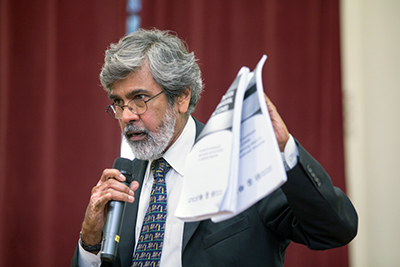
Visiting Singapore writer and academic tells a Foreign Correspondents' Club audience that arguments about Singapore's "good governance" are not sufficient to explain the ruling party's decades-long hold on power and its ability to suppress press freedoms. Rather, a combination of factors such as market forces and self-restraint, e.g., more use of civil law, have become the preferred tools to curtail media freedoms.
9 October 2013

Bringing the buzz back to business news: New models for online journalism

As traditional newspapers and magazines fold or struggle to make money in the United States, a host of new online-only news outlets are thriving. Quartz is a "digitally native" business publication from Atlantic Media, publishers of The Atlantic Monthly, the literary and investigative journalism magazine first published in 1857. Quartz just celebrated its first anniversary and recently surpassed The Economist in US online readers (it is edging up on the Financial Times in the US as well). How and why has it found this audience, and what is it doing differently?
8 October 2013

Workshop on Integrated Marketing Communication for Behavioural Impact (IMC/COMBI) in Health and Social Development

This 10-day course focuses on strategic communication planning for behavioural impact in health and social development, based on the COMBI (Communication for Behavioural Impact) used by the World Health Organization and UNICEF in areas ranging from communicable and non-communicable diseases to HIV/AIDS, early childhood development, and perinatal care.
7 October 2013

JMSC Professor Completes Project on Censorship in China

New research at JMSC on the intersection of censorship and big data reveals that Chinese social media is an important source of real-time data on breaking events and social trends in China as well as what key words the government is using to censor the Internet.
4 October 2013

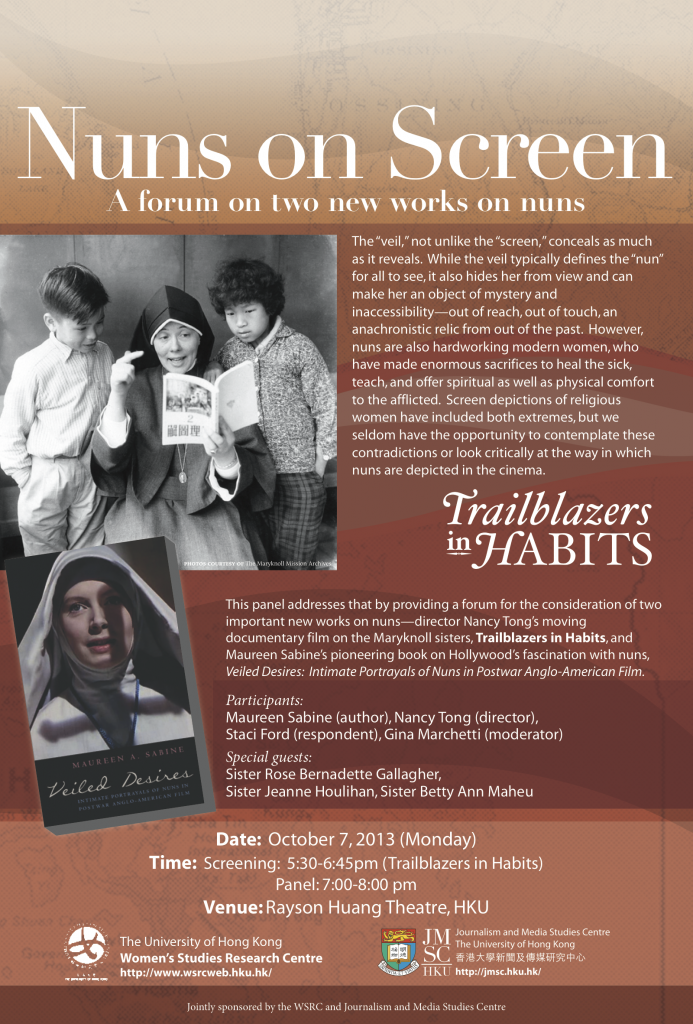
NUNS ON SCREEN – screening and panel

The “veil,” not unlike the “screen,” conceals as much as it reveals. While the veil typically defines the “nun” for all to see, it also hides her from view and can make her an object of mystery and inaccessibility—out of reach, out of touch, an anachronistic relic from out of the past. However, nuns are also hardworking modern women, who have made enormous sacrifices to heal the sick, teach, and offer spiritual as well as physical comfort to the afflicted. Screen depictions of religious women have included both extremes, but we seldom have the opportunity to contemplate these contradictions or look critically at the way in which nuns are depicted in the cinema (in commercial features as well as documentaries and experimental films). This panel addresses that by providing a forum for the consideration of two important new works on nuns—director Nancy Tong’s moving documentary film on the Maryknoll sisters, Trailblazers in Habits, and Maureen Sabine’s pioneering book on Hollywood’s fascination with nuns, Veiled Desires: Intimate Portrayals of Nuns in Postwar Anglo-American Film.