

Master of Journalism
The world has never needed well-trained journalists more than right now.
An anti-intellectual war on facts is being waged. People and organisations are pushing their agendas with manipulations and distortions of the truth and even outright lies. Social media is awash in unclear and unverified information presented as “truth”.
Journalists have the opportunity to push back against this assault on knowledge by presenting fair, balanced, well-researched reporting to the public. At HKU Journalism, we can teach you how.
Our nine-month, two-semester programme will prepare you for these challenges. Whether you’re new to reporting or a mid-career journalist seeking to update and refresh their skills, we have what you need.
It won’t be easy. Earning an HKU Master of Journalism degree may be the hardest challenge you have ever faced. But once you have completed the programme, you will be a different person, changed for the better.
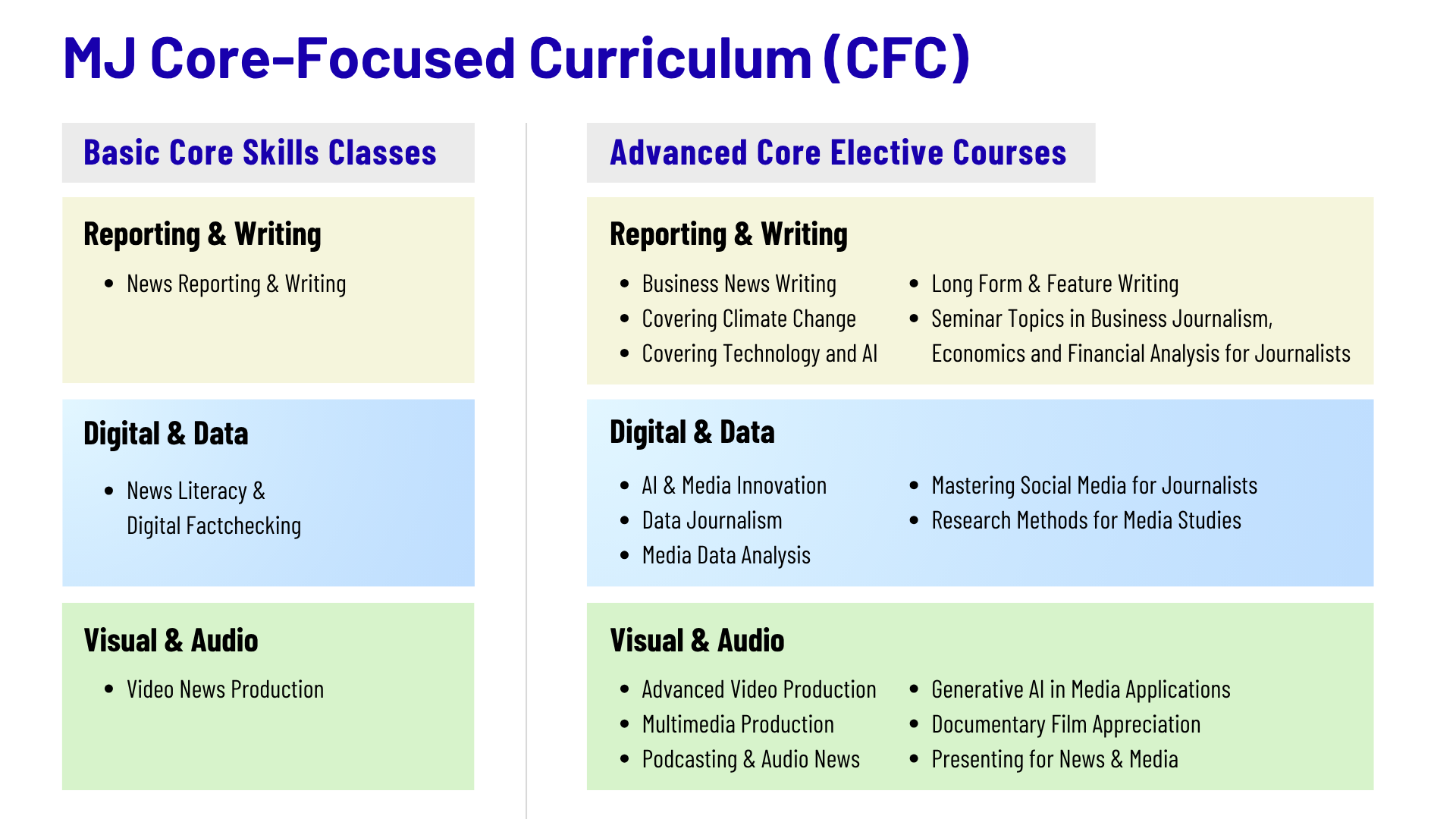
Our specially designed Core Focused Curriculum (CFC) makes our Master of Journalism (MJ) programme one of Asia’s most challenging and cutting edge. Our focus is on doing, not simply theory. The CFC will equip you with the three core skill sets you need in today’s professional journalism world:
- Reporting/Writing
- Visual/Audio Storytelling Techniques
- Digital/Data Tools
You’ll get two full semesters of all three skills. The first semester is focused on compulsory basics. The second semester provides greater depth while offering a broader range of choices including specialisations such as documentary, business news, podcasting and covering China.
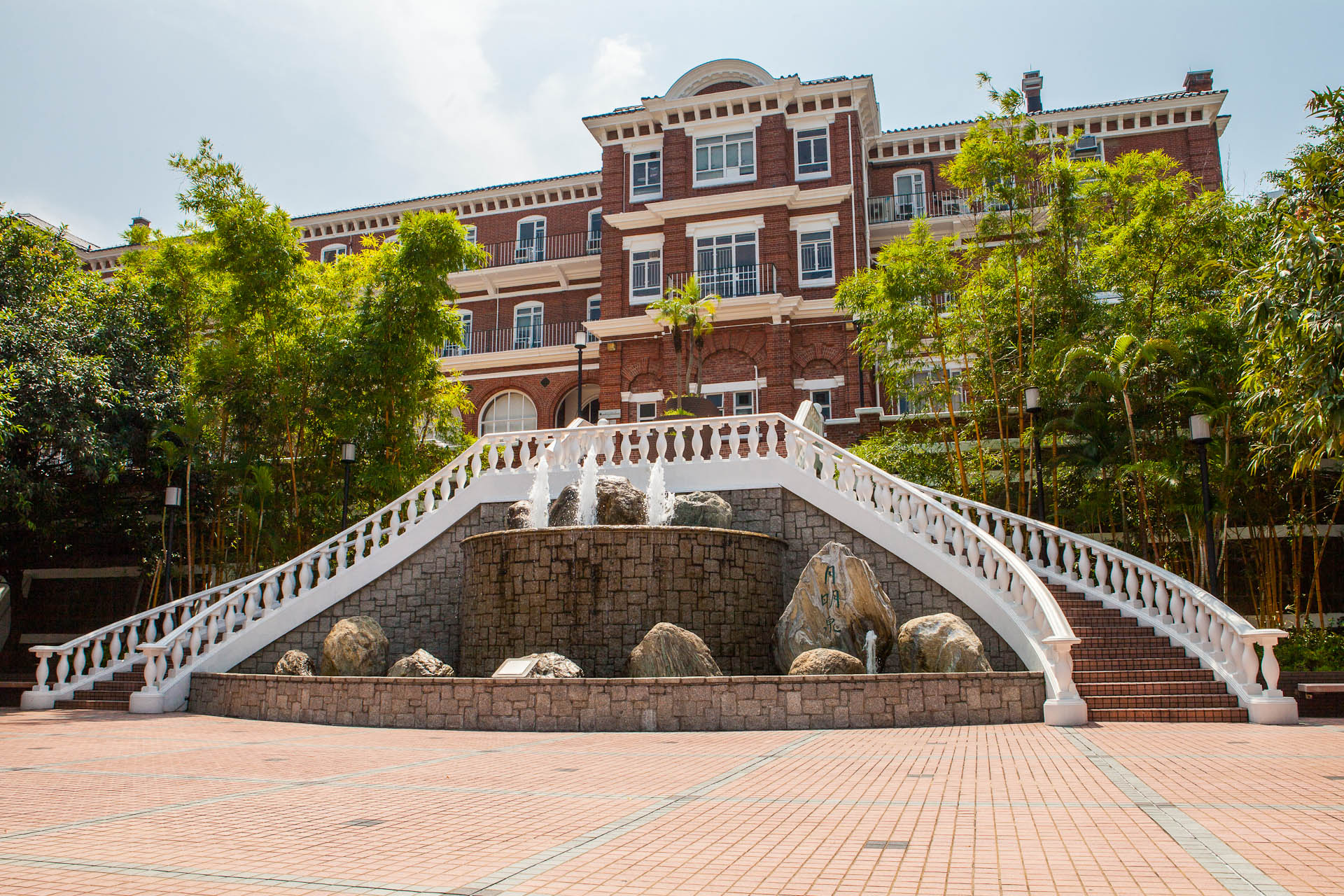
Eliot Hall on The University of Hong Kong campus
Our alumni have gone on to jobs at the South China Morning Post, The New York Times, BBC, Bloomberg, CNN, Vice Media, AFP, Reuters, AP, the Wall Street Journal and many other respected news brands. These are same kind of top-notch journalism organizations where our faculty have worked, or, in many cases, are still working.
So, if you’re ready to join the essential pursuit of truth, we will equip you with what you need for that exciting, satisfying mission.
About the programme
The Master of Journalism (MJ) course is a one-year full-time or a two-year part-time course. Students learn the core skills of journalism—reporting and writing, television and video production, media law and ethics, and new media. Students also have the opportunity to take elective courses in a broad range of subjects from business and finance to data journalism to digital media. Candidates shall complete no fewer than 60 and no more than 72 course credits.
Please visit the Admissions page here to learn how to apply.
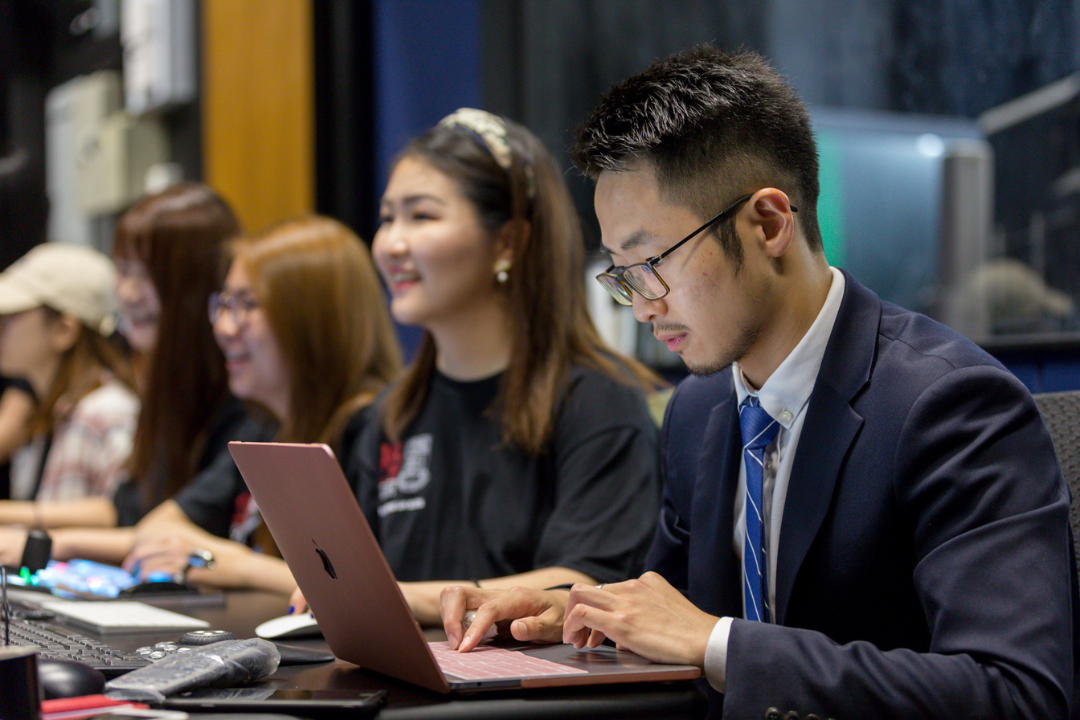
Internships
The JMSC’s network with leading international media organisations has helped build one of the most dynamic journalism internship programmes in the world. To find out more about internships with the JMSC, click here.
Useful links
Course List
Compulsory courses
- Reporting and writing
- News literacy and digital factchecking
- Video news production
- Media law and ethics
- Master’s project (Capstone)
Elective courses (Reporting and Writing)
- Long form and feature writing
- Covering technology and A.I.
- Covering climate change
- Seminar topics in business journalism
- Business news writing
- Economics and financial analysis for journalists
Elective courses (Digital and Data)
- A.I. and media innovation
- Mastering social media for journalists
- Data journalism
- Media data analysis
- Research methods for media studies
Elective courses (General)
- Outdoor adventure journalism
- Journalism internship
Elective courses (Visual and Audio)
- Generative A.I. in media applications
- Advanced generative A.I. in creative media
- Advanced video production
- Multimedia production
- Presenting for news and media
- Documentary film appreciation
- Podcasting and audio news
Provision of feedback
We believe that detailed and timely feedback on student assignments is a critical component of an active-learning environment founded on continuous assessment. Therefore, the School of Future Media requires course instructors to return all student work submitted for assessment, including weekly tutorial assignments, media projects and exams, to the student with written comments as well as a grade. Weekly tutorial assignments should be assessed and returned to students within one week of the submission deadline. Other assessment tasks such as exams or media projects should be returned to students with detailed comments within one month of submission. Feedback on oral presentations or group projects may be delivered orally or in writing.
FAQs
1. Can I apply to the MJ programme if I have not studied journalism before, or if I do not have a journalism background?
Yes, definitely. The MJ programme is designed to give you the tools and training required to work in a news organisation regardless of what you have studied before, or what experience you might have. We encourage students with varied backgrounds to apply. Typically our student body includes law, economics and finance graduates, as well as those who have studied languages, and a variety of other subjects. Many of our students have had working experience in different professions. We also encourage those with journalism experience who might wish to upgrade their skills to apply. You will find our Admissions requirements here.
2. I have been working for some years after graduation. Do I still need to submit my transcripts?
Yes, you will need to supply your transcripts as well as all the other material specified in the Admissions page.
3. Where should I send my supporting documents (e.g. TOEFL or IELTS result, academic transcripts, etc.) to?
Applications to the MJ programme must be made online at http://www.als.hku.hk/admission/tpg. Please upload the required documents (including transcripts, diplomas, certificates, TOEFL/IELTS result, personal CV) to the online application system for our preliminary consideration before the application deadline. Your application number should be marked on each document. Transcripts, diplomas, certificates and other submitted documents which are not in English should be accompanied by a certified translation in English. Certified translation may be provided by your home institution.
Please note that you are not required to submit original/certified true copy of your documents to the University during the application stage. You will receive notification to submit your documents (e.g. transcripts and TOEFL/IELTS result) at a later stage of admission to the following address:
School of Future Media
Room 119, Eliot Hall
The University of Hong Kong
Pok Fu Lam, Hong Kong
(Please include your online application number on each page of the document. )
You should mark the programme name, your name and online application reference number on the envelopes.
4. When is the latest submission date for supporting documents, e.g. TOEFL/IELTS result?
You should try and submit as soon as possible. For example, if you have just sat the TOEFL/IELTS test but the results have not yet been released, please indicate this clearly in the ‘English Language Requirement’ field of the online application form and request the result be sent directly to the University once available. Generally speaking, you will only receive a conditional offer of admission after all your supporting documents are submitted.
5. Is there any specific GPA requirement?
There is no minimum GPA requirement but successful applicants usually have a solid academic record.
6. Do I need to submit reference letters? If so, can these be written in any language?
It is not an absolute requirement to submit reference letters, but references do help us consider each applicant more closely and in some cases applications benefit significantly from such supporting documents. It is advisable to have reference letters in English.
7. Do I need to submit proof of my family’s financial situation?
Not unless you are being considered for a scholarship.
8. What is the purpose of the written test and interview?
The written test and interview help us determine a candidate’s knowledge of English usage, grammar, critical thinking skills and aptitude for journalism.
9. How can I pay the application fee? Is it possible for me to pay online by credit card?
Application fees must be paid online using Visa or Mastercard.
10. How can I apply for a scholarship? What are the selection criteria?
Details of scholarships can be found on the Scholarships page. In general, only candidates who have been accepted for admission are eligible to apply for scholarships.
11. Is it possible to apply by post?
No. Applications must be made online at http://www.als.hku.hk/admission/tpg. and upload your supporting documents to the online application system by the deadline.
12. Is the Master of Journalism programme recognised by employers? What are the employment prospects like for MJ graduates?
Yes, top employers recognise the quality and standard of our MJ degree and graduates. Our graduates are have been recruited by many leading news and media organisations in the region and around the world.
13. Do non-local students need to apply for a visa to study in Hong Kong?
Yes. The Hong Kong Immigration Department issues student visas to applicants enrolling in full-time courses at the University. Details of the visa application procedure are available from HKU’s Admissions and Academic Liaison Section (AAL)
14. What is the cost of living in Hong Kong?
Hong Kong is an expensive city. Students living in on-campus postgraduate residences will require approximately US$1,000–$1,200 per month to cover food, lodging and general living expenses (excluding tuition fees). If living off-campus, students can expect to budget more as accommodation can be more expensive (single room from HK$40 per sq. ft. up, excluding utilities). See preparatory guide for non-local students.
15. Can I live in a University residence? How do I apply?
There is limited accommodation for non-local postgraduates at St. John’s College, Graduate House, Morrison Hall and Pokfield Road Residences. Most of our students share flats with their classmates or other students in private accommodation close to the university. Here are some options:
- University-rented-off-campus-accommodation
- Budget hotels and youth hostels nearby HKU
- CEDARS iMAP for shared flats, serviced apartments and online forum for finding rooms/flats/roommates
- Leasing properties nearby HKU and around Hong Kong
16. If I am offered admission but am unable to join can I apply for deferment of study to the following year?
Unfortunately university admission policy does not allow deferment. If for some reason you cannot take up an admission offer, you will have to re-apply, although you could be exempted from the qualifying written examination and interview.